

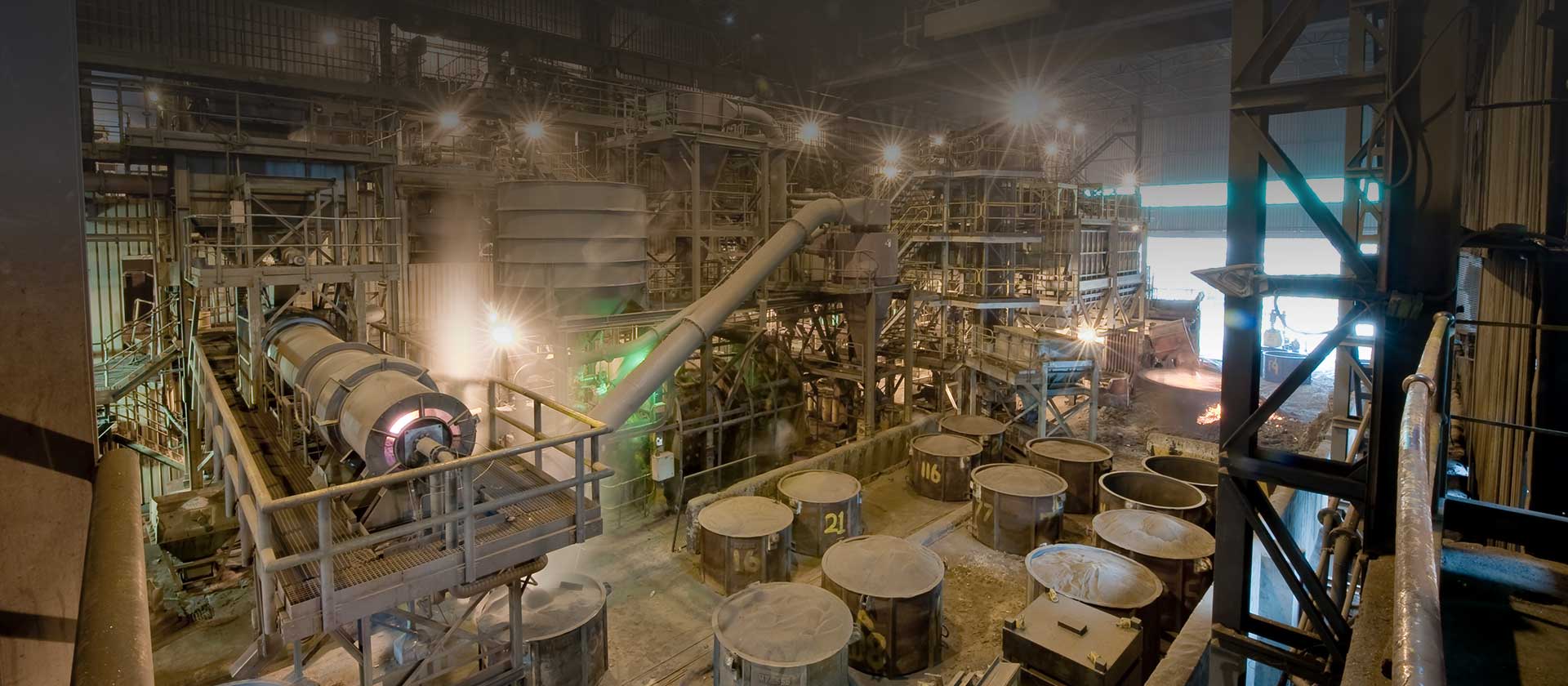
Global supplier & manufacturer of Ferrosilicon (FeSi)
Atomised FeSi
Coarse, Fine, Cyclone 60, Cyclone 40, DMS 70

Milled FeSi
65D, 100D, 150D, 270D, 270F

The choice between milled and atomised ferrosilicon affects dense medium separation efficiency, medium stability, viscosity, recovery and operating cost. Both forms perform the same basic function: they are mixed with water to create a dense, magnetically recoverable suspension that separates minerals according to relative density. Their particle shape and size distribution, however, produce different behaviour inside cyclones, drums, baths and medium recovery circuits.
In a direct comparison of milled vs atomised ferrosilicon for dense medium separation, atomised material generally offers better flow characteristics at high medium densities. Milled ferrosilicon tends to provide good suspension stability and can be a cost-effective option where the required density and circuit conditions suit its more angular particle shape. Neither type is automatically right for every plant.
Ore characteristics, target cut-point, separator design, circulating medium density, feed contamination and magnetic recovery performance all influence the decision. A product that works reliably in a low-density bath may behave very differently in a high-density cyclone treating finely crushed ore.
The best selection is therefore based on the complete circuit, not simply the purchase price per tonne. Particle-size distribution, rheology, medium losses and achievable separation accuracy must be considered together.
Direct comparison of milled and atomised ferrosilicon
The principal difference is how the particles are manufactured. Milled ferrosilicon is produced by crushing and grinding solid ferrosilicon into the required size range. This creates particles with irregular, angular surfaces. Atomised ferrosilicon is formed by breaking a stream of molten alloy into droplets that solidify as comparatively smooth, rounded particles.
Those shapes affect how the particles interact in suspension. Angular milled particles have more points of contact and greater resistance to movement past one another. Rounded atomised particles flow more freely, especially as the concentration of solids increases.
- Particle shape: Milled ferrosilicon is angular and irregular; atomised ferrosilicon is rounded or near-spherical.
- Viscosity: Atomised material normally produces lower apparent viscosity at an equivalent solids concentration and particle-size distribution.
- Suspension stability: Fine and angular particles generally settle more slowly, although excessive fines can raise viscosity.
- High-density operation: Atomised ferrosilicon is commonly favoured where a high medium density must be achieved without making the suspension excessively viscous.
- Purchase cost: Milled material can have a lower initial price, but the relevant comparison is the cost per tonne of feed treated at the required separation performance.
These are general tendencies. A fine atomised grade can be more viscous than a coarse milled grade, which is why comparisons must be made between actual product specifications and under realistic plant conditions.
How milled ferrosilicon behaves in a DMS circuit
Milled ferrosilicon has a rough, angular morphology produced by mechanical crushing and grinding. The particles form a stable suspension when the grade contains an appropriate balance of coarse material and fines. This stability helps limit rapid settling in sumps, launders, pipework and separators.
The same particle interactions that aid stability also increase resistance to flow. As solids concentration rises, angular particles can interfere with one another and cause a sharper increase in viscosity. This may limit the maximum practical medium density or reduce separation efficiency if the slurry becomes too viscous for particles of ore to move according to density.
Milled ferrosilicon can be suitable for applications with moderate operating densities, less demanding rheological conditions or equipment designed around its characteristics. It is also relevant where a plant’s operating history, pumps, magnetic separators and density-control system are already configured for a particular milled grade.
Its suitability cannot be judged from the words “milled ferrosilicon” alone. Two grades may differ substantially in their top size, proportion of fines and particle-size distribution. Those differences can affect settling rate, medium adhesion to product, magnetic recovery and losses through screens.
How atomised ferrosilicon behaves in a DMS circuit
Atomised ferrosilicon consists of smoother particles formed as molten droplets cool and solidify. Their rounded geometry reduces inter-particle friction. This allows the medium to remain comparatively fluid at solids concentrations that could make an angular powder difficult to pump or control.
Lower viscosity is especially valuable in dense medium cyclones and high-density mineral applications. In a cyclone, both ore and medium are exposed to strong centrifugal forces. The medium must be dense enough to achieve the required cut-point while remaining sufficiently fluid for efficient stratification and discharge.
Rounded particles can settle more readily if the selected grade is too coarse or if circulation is poor. Atomised ferrosilicon is therefore still supplied in controlled size ranges, with enough fine material to support medium stability. Pumps, agitation and correct circuit velocity remain necessary; particle shape does not remove the need for sound medium management.
Atomised material is often selected for demanding separations involving high medium densities, tight control of viscosity or a need to reduce the rheological penalty of increasing solids concentration. The potential operating benefit must be weighed against delivered price, consumption and recovery performance.
Why medium viscosity influences separation accuracy
A DMS suspension must meet two requirements that can pull in opposite directions. It must resist rapid settling so that density remains reasonably uniform, but it must also flow freely enough for the ore particles to separate. Selecting a finer powder improves stability, yet too many fines increase viscosity and can make the separation less efficient.
Excessive viscosity slows the movement of particles through the medium. Near-density material is particularly sensitive because the difference between its density and the cut-point is small. If movement is restricted, particles may report to the wrong product stream, lowering recovery or contaminating the concentrate.
High viscosity can also affect pressure drop, cyclone operation, pump demand and density measurement. Operators may see the correct density reading while obtaining poorer separation because medium density alone does not describe rheology.
Conversely, a medium that is too coarse or unstable can settle in low-velocity sections. This creates density variation, blockages and inconsistent separator performance. Successful selection finds a workable balance between stability and viscosity for the plant’s operating window.
Particle-size grade matters as much as manufacturing method
Ferrosilicon powders are available in different particle-size grades. Grade names can indicate nominal fineness, but naming conventions do not always provide a complete picture. A technical review should use the supplier’s particle-size distribution, including the coarse limit and the proportion passing relevant sieve or sizing points.
A coarser grade generally has lower viscosity and drains more readily from product screens. It may, however, settle faster and can be more difficult to keep evenly suspended. A finer grade provides improved stability but can increase medium carry-over, adhesion and viscosity.
Plants sometimes attempt to solve instability by moving immediately to a finer grade. If poor agitation, inadequate circulation or a malfunctioning pump is the real cause, the change can replace a settling problem with a viscosity problem. Circuit conditions need to be checked before changing powder specification.
For an overview of available options, buyers can review the DMS Powders ferrosilicon product range and discuss the required particle characteristics against their plant data.
Key criteria for selecting milled or atomised ferrosilicon
Required operating density and cut-point
The target separation density is the first filter. Higher medium densities require a greater concentration of ferrosilicon. As concentration rises, particle shape becomes increasingly significant. Atomised powder can offer an advantage where the plant needs a dense medium that remains pumpable and responsive.
The required medium density should not be confused with the mineral’s target product specification. Washability or sink-float data, the proportion of near-density material and the expected separation efficiency all help establish the practical cut-point.
Separator type
Dense medium drums and baths operate differently from cyclones. Baths generally have lower velocities and rely heavily on suspension stability, while cyclones introduce high shear and centrifugal forces. A grade that performs well in one device is not necessarily optimal in another.
Cyclone diameter, inlet pressure, apex and vortex finder configuration, throughput and feed size all influence medium behaviour. The ferrosilicon specification must be considered as part of this operating system.
Ore type and feed-size distribution
Coal, iron ore, manganese, chrome, diamonds and other minerals do not create identical DMS conditions. Feed top size, fines content, clay contamination and surface characteristics affect viscosity and medium drainage.
Slimes entering the circulating medium can increase viscosity even if the ferrosilicon specification has not changed. A plant treating weathered or clay-rich material may therefore require stronger desliming and closer rheology control than one processing clean, competent ore.
Medium recovery equipment
Ferrosilicon is magnetically recoverable, which allows it to be collected from dilute medium after rinsing and returned to the correct-medium circuit. Magnetic separator condition, feed dilution, flow distribution and magnetic loading affect recovery.
Particle size also matters. Very fine particles may be more difficult to recover completely, while coarse particles can be lost through inefficient screening or poor drainage arrangements. Losses should be investigated by sampling the product, discard, rinse-water and magnetic separator streams instead of assuming that powder type is solely responsible.
Logistics and continuity of supply
Remote mining operations need to consider lead times, packaging, storage conditions and shipment planning. This is particularly relevant to global operations supplied across long inland and maritime routes. A technically suitable grade is of little use if stock planning does not account for consumption variability and delivery time.
Ferrosilicon powder should be kept dry and handled in accordance with the supplier’s safety information. Wet or damaged packaging can complicate dosing and inventory control. Dust-control measures, suitable personal protective equipment and properly designed transfer systems are also part of responsible powder handling.
Compare total operating cost, not only price per tonne
The lowest powder price does not always create the lowest separation cost. Medium consumption, product recovery, plant availability and concentrate quality can outweigh a difference in purchase price.
A useful cost comparison includes:
- Delivered ferrosilicon cost and applicable logistics.
- Kilograms of medium consumed per tonne of feed.
- Value of mineral recovery and product-quality changes.
- Magnetic separator and screen performance.
- Pumping, mixing and density-control requirements.
- Downtime caused by settling, blockages or unstable operation.
- Medium carried out on product and discard streams.
Consumption data must be compared over a representative operating period. A short test can be distorted by inventory changes, sump clean-outs, commissioning losses or abnormal feed conditions. Reconciled additions and losses provide a better basis for evaluating the commercial result.
A practical plant trial process
Changing ferrosilicon type or grade is best handled as a controlled plant trial. Establish a stable baseline before introducing the alternative powder. Record feed rate, feed grading, ore density distribution, circulating medium density, viscosity or rheological indicators, cyclone pressure, product quality and medium consumption.
- Define the problem or objective. Examples include achieving a higher density, lowering viscosity, improving recovery or reducing medium loss.
- Review the current circuit. Check desliming, screening, pumps, agitation, density instruments and magnetic separators before blaming the medium.
- Obtain comparable product data. Assess manufacturing method, chemical composition, particle-size distribution and handling information.
- Plan the transition. Allow for mixing with existing circuit inventory and avoid judging the new product before the old medium has been sufficiently displaced.
- Hold major variables steady. Where practical, avoid simultaneous changes to cyclone geometry, feed preparation and operating pressure.
- Sample the relevant streams. Measure separation performance as well as medium density and consumption.
- Review total economics. Evaluate recovery, quality, stability and losses alongside delivered cost.
Laboratory rheology and settling tests can narrow the options, but they cannot reproduce every feature of a working circuit. Plant-scale validation remains valuable, particularly where feed mineralogy varies.
Common selection and operating mistakes
Choosing only by grade name: The full particle-size distribution is more useful than a nominal label. Request data that allows direct comparison between products.
Using density as the only control measure: Two suspensions at the same density can have different viscosity and stability. Observe rheology and separation results as well.
Ignoring non-magnetic contamination: Ore slimes and corrosion products can build up in the circulating medium. They alter rheology but are not corrected simply by adding fresh ferrosilicon.
Assuming finer is always better: Finer powder improves stability only up to the point where viscosity and carry-over become unacceptable.
Changing products without a baseline: Without reliable data from the existing operation, it is difficult to identify whether a trial improved technical performance or total cost.
Treating medium loss as a single number: Determine where the loss occurs. Screen oversize, magnetic separator effluent, leaks and material adhering to products require different corrective actions.
Which ferrosilicon type is the better choice?
Atomised ferrosilicon is often the stronger candidate for high-density, viscosity-sensitive separations and demanding cyclone applications. Its rounded particles permit high solids concentrations with comparatively favourable flow behaviour.
Milled ferrosilicon remains a practical choice for circuits operating at suitable densities where its stability, availability and economics align with plant requirements. An established circuit can perform consistently with a correctly selected milled grade, particularly when contamination and recovery are well controlled.
A blend may sometimes be evaluated to balance rheology, stability and cost, but blending requires control. Unplanned mixing of different grades can shift the particle-size distribution and make operating results harder to interpret.
The correct answer comes from matching powder morphology and size distribution to the ore, separator and recovery circuit. That is more reliable than selecting atomised or milled material from a general rule.
Frequently asked questions
Is atomised ferrosilicon always better than milled ferrosilicon?
No. Atomised ferrosilicon generally offers lower viscosity at high solids concentrations, but milled material can be technically and commercially suitable at moderate densities or in circuits designed around its characteristics. Required density, separator type, ore contamination, particle-size grade and total operating cost determine the better choice.
Can milled and atomised ferrosilicon be mixed?
They can physically be mixed, and controlled blends may be assessed for specific applications. The resulting medium will have a combined particle-shape and size distribution, so its viscosity and settling behaviour need testing. Accidental or uncontrolled mixing can make plant performance difficult to evaluate.
What information does a supplier need to recommend a ferrosilicon grade?
Useful information includes the mineral being treated, separator type and dimensions, feed-size range, target cut-point, normal medium density, current powder grade, observed viscosity or settling problems, medium consumption, throughput and destination. Details of desliming, screening and magnetic recovery also improve the selection process.
Discuss your DMS medium requirements with DMS Powders
DMS Powders supplies ferrosilicon powders for dense medium separation in the global mining sector. The company’s background and focus on DMS ferrosilicon provide context for procurement teams and plant personnel comparing medium options.
For help evaluating milled vs atomised ferrosilicon for dense medium separation, send DMS Powders your target density, separator type, feed sizing, current grade and operating concern. Contact DMS Powders for a product enquiry and discuss a specification suited to your circuit and supply requirements.