
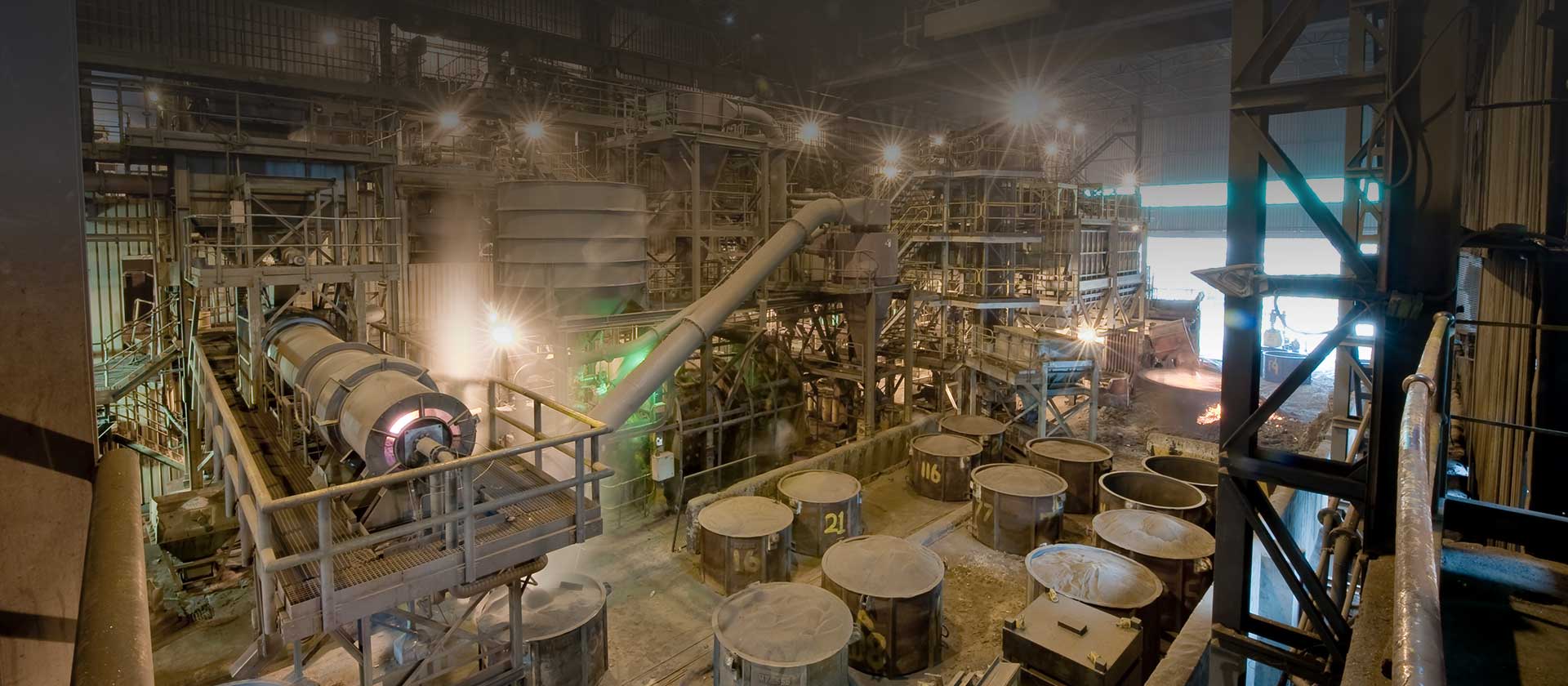
Global supplier & manufacturer of Ferrosilicon (FeSi)
Atomised FeSi
Coarse, Fine, Cyclone 60, Cyclone 40, DMS 70

Milled FeSi
65D, 100D, 150D, 270D, 270F

Ferrosilicon for diamond ore dense medium separation provides the controllable slurry density needed to separate liberated diamond-bearing particles from lower-density waste. In a correctly designed circuit, fine ferrosilicon powder is mixed with water and circulated through a dense medium cyclone. Particles that are denser than the effective separation density report to the sinks stream, while lighter material reports to floats.
The medium does not identify diamonds selectively. Diamonds have a relative density of approximately 3.5, but other dense minerals may also enter the sinks fraction. Dense medium separation therefore produces a smaller, higher-density concentrate for downstream recovery rather than a finished diamond product.
Ferrosilicon grade, particle size distribution, slurry stability and magnetic recoverability all affect plant performance. An unsuitable powder can increase medium consumption, impair cyclone separation or create an unnecessarily viscous slurry. Ore preparation and operating control are equally significant, so medium selection should be based on the complete circuit rather than nominal density alone.
This article explains how ferrosilicon behaves in a diamond DMS plant, how to assess available grades and which operating conditions commonly influence recovery, concentrate yield and medium losses.
What ferrosilicon does in a diamond DMS circuit
DMS-grade ferrosilicon is an iron-silicon alloy powder with a high particle density and a magnetic response that allows it to be recovered from process water. Suspended in water at a controlled concentration, it forms a dense medium whose relative density can be adjusted to suit the ore and required separation point.
A typical diamond ore circuit crushes and screens kimberlite, lamproite or another diamond-bearing material into defined size fractions. Scrubbing may be used to break down clay-rich material, followed by screening or classification to remove fines that would interfere with the medium. The correctly sized feed is mixed with the dense medium before entering a cyclone or another gravity separation vessel.
Inside a dense medium cyclone, centrifugal forces amplify the density-based separation. The lower-density fraction generally leaves through the overflow as floats, while denser particles leave through the underflow as sinks. The sinks product then passes to downstream concentration, sorting or diamond recovery stages appropriate to the plant.
After separation, drain-and-rinse screens recover medium from both product streams. The dilute medium is cleaned and concentrated, commonly using magnetic separators, before returning to the correct-medium circuit. This recovery loop is one reason ferrosilicon is well suited to continuous mineral-processing operations.
Diamond recovery begins with effective ore preparation
Even a carefully selected ferrosilicon grade cannot compensate for poorly prepared feed. Dense medium separation works on differences in particle density, so the feed must first be liberated and presented within the size range for which the plant was designed.
Excessively large particles may be poorly liberated or exceed the cyclone’s top-size capability. Very fine material can increase viscosity, contaminate the circulating medium and reduce the sharpness of separation. Clays are particularly troublesome because they can disperse into the process water and change slurry behaviour without causing an obvious change in the amount of ferrosilicon added.
Effective preparation normally requires attention to:
- Controlled crushing: The circuit must liberate diamond-bearing particles while limiting unnecessary breakage and the production of excessive fines.
- Scrubbing: Weathered or clay-rich ore may need sufficient attrition to remove coatings and disaggregate soft material.
- Screening accuracy: Oversize, undersize and misplaced particles can all compromise the separation.
- Desliming: Removing slimes helps protect medium stability, viscosity and magnetic recovery efficiency.
- Consistent feed rate: Sudden variations in solids loading can change cyclone performance even if the measured medium density remains steady.
Ore mineralogy and competency can change across a deposit. Plants should therefore assess how different ore domains affect fines generation, medium contamination and yield rather than assuming that one set of operating conditions will remain optimal throughout the mine life.
How to select ferrosilicon for diamond ore dense medium separation
The correct product is not simply the powder with the highest density or finest particle size. Selection requires a balance between medium stability, viscosity, magnetic recovery, resistance to degradation and the separation density required by the plant.
Particle size distribution
Ferrosilicon must remain sufficiently suspended to form a consistent medium. A distribution that is too coarse can settle rapidly in tanks, launders and low-velocity sections. This creates density variation and may require more agitation or pumping energy. At the other extreme, excessive ultrafines can increase viscosity and make rinsing or magnetic recovery more difficult.
The target distribution should reflect the medium density, cyclone size, circulation rate, pipework and the amount of non-magnetic contamination expected from the ore. A supplier’s product specification should be considered alongside plant trials and medium samples taken under actual operating conditions.
Atomised and milled ferrosilicon
Ferrosilicon powder is commonly produced in atomised or milled form. Atomised material tends to have more rounded particles, while milling produces a more angular particle shape and a different size profile. Particle shape influences packing, slurry rheology, surface area and resistance to physical degradation.
Neither description should be treated as a complete purchasing specification. Different grades can exist within each production route, and suitability depends on the circuit. High-density applications or plants requiring tightly controlled rheology may favour a particular atomised grade, while other operations may achieve the required result with an appropriately specified milled or blended product. Comparative testing should use the intended operating density and representative process water.
Medium viscosity and stability
A stable medium resists rapid settling, but stability achieved through an excessive proportion of fine particles can create high viscosity. A viscous medium restricts the movement of particles relative to the fluid, potentially causing misplaced floats and sinks. It can also affect cyclone pressure, pumping and screen drainage.
Density and viscosity should consequently be assessed together. Two media at the same relative density can perform differently because of ferrosilicon size distribution, clay contamination, water chemistry or degradation of the circulating powder.
Magnetic response and recovery
Ferrosilicon’s magnetic properties allow dilute medium to be recovered after rinsing. Effective magnetic separation reduces losses and limits the amount of alloy discharged with tailings, concentrate or effluent. Product selection should therefore account for magnetic susceptibility as well as fresh-medium behaviour.
Recovery performance is also governed by magnetic separator condition, feed dilution, flow distribution and the accumulation of non-magnetic solids. Poor recovery should not automatically be attributed to the supplied powder without checking the recovery circuit.
Consistency between deliveries
Stable DMS control depends on predictable feed material. Procurement specifications should define the parameters that matter to the plant, supported by appropriate supplier documentation and incoming quality checks. Relevant parameters may include size distribution, apparent or particle density, moisture, chemical composition and magnetic behaviour.
Mining operations can review the available ferrosilicon powder products from DMS Powders and discuss grade selection against the plant’s cyclone configuration, target medium density and ore characteristics.
Medium density is not the same as separation density
Operators often monitor the density of the circulating medium because it can be measured and adjusted relatively quickly. However, the measured medium density does not necessarily equal the effective cut density achieved inside the cyclone.
The actual separation is affected by cyclone geometry, inlet pressure, feed solids, particle size, medium rheology and the density differential between the cyclone overflow and underflow. A stable density reading at one sampling point may conceal segregation elsewhere in the circuit.
Partition testing provides a more useful assessment of separation efficiency. Representative particles or density tracers are passed through the circuit, and their distribution between sinks and floats is analysed. The results can indicate the density at which particles have an equal probability of reporting to either stream and reveal how sharply the separation occurs.
For diamond ore, the selected cut point must reject enough low-density waste while retaining the dense particles that could contain diamonds. Setting the cut density too low can produce an unnecessarily large concentrate, increasing the load on downstream recovery. Setting it too high can increase the risk of valuable material reporting to floats, particularly where particles are partially liberated or have composite densities.
Operating variables that influence cyclone performance
Ferrosilicon quality is only one part of a functioning DMS circuit. Several interacting variables determine whether the cyclone produces a consistent and efficient separation.
- Feed pressure: A dense medium cyclone requires operation within its designed pressure range. Fluctuating or unsuitable pressure changes the internal flow pattern and separation behaviour.
- Medium-to-ore ratio: Insufficient medium can overload the cyclone with solids, while excessive circulation adds pumping and recovery demand without necessarily improving separation.
- Feed size range: Wide size distributions can separate less sharply because fine and coarse particles respond differently inside the cyclone.
- Cyclone wear: Wear to the inlet, vortex finder, body or spigot changes the cyclone geometry and can gradually shift performance.
- Spigot condition: Partial blockages or unsuitable spigot dimensions affect underflow discharge and density differentials.
- Process water: Dissolved salts, suspended clay and changing water sources may alter medium rheology and corrosion behaviour.
- Instrumentation: Density gauges, pressure instruments and flow meters require inspection and calibration. A stable but inaccurate reading can lead to confident operation at the wrong condition.
Control-room trends should be compared with physical samples and metallurgical results. Visual observations of drain-and-rinse screens, magnetic separator discharge and cyclone products can expose problems that a single density measurement misses.
Reducing ferrosilicon consumption and medium losses
Ferrosilicon is continuously recovered and reused, but every DMS plant experiences some loss. The useful objective is to identify avoidable losses without compromising rinsing, separation stability or concentrate quality.
Medium can leave the circuit through adhesion to ore particles, inefficient rinsing, screen damage, spillage, leaks, magnetic separator inefficiency and deliberate bleed streams used to control contamination. Fine or degraded ferrosilicon may also be harder to recover than material within the intended particle size range.
A practical loss investigation should establish where the material is going. This normally means sampling floats, sinks, rinse water, magnetic separator products and discard streams rather than calculating only the difference between deliveries and stock levels.
Useful corrective actions may include:
- Checking drain-and-rinse screen panels for wear, damage and incorrect aperture selection.
- Maintaining effective spray coverage and suitable rinse-water pressure without overwhelming the dilute-medium circuit.
- Inspecting launders, sumps and pipework for settled material and hidden leakage.
- Testing magnetic separator feed conditions and recovered-medium quality.
- Controlling clay and slimes before the DMS stage.
- Monitoring the particle size distribution of circulating medium to identify degradation or selective losses.
- Keeping accurate fresh-medium addition and production records on a consistent basis.
The cheapest powder per tonne is not necessarily the lowest-cost medium in operation. Consumption rate, recovery efficiency, separation performance, concentrate volume and plant availability all contribute to the real cost of use.
Common causes of unstable or poor separation
Medium density changes rapidly
Rapid variation may result from inconsistent fresh-medium dosing, water ingress, an unstable sump level, poor agitation or changing returns from the dilute-medium circuit. Sampling at several points can distinguish a control problem from density segregation within the plant.
Ferrosilicon settles in tanks or pipework
Settling can indicate inadequate agitation, low line velocity, an unsuitable particle size distribution or extended shutdowns without the correct restart procedure. Simply adding finer powder may increase viscosity, so the hydraulic cause should be checked first.
The medium becomes progressively more viscous
Clay ingress, ore fines, corrosion products and accumulated ultrafine ferrosilicon can all increase viscosity. Medium density may remain on target while separation sharpness deteriorates. Desliming performance and circulating-medium composition should be examined before changing the density set point.
Concentrate yield rises unexpectedly
A higher sinks yield can reflect a genuine change in ore mineralogy, a lower effective cut density, cyclone wear, feed-size changes or medium rheology. It does not automatically indicate improved diamond recovery. Yield should be interpreted with partition data and downstream recovery results.
Ferrosilicon consumption increases
Check for damaged screens, poor rinsing, magnetic separator inefficiency, leaks and increased surface moisture or fines in the feed. Comparing ferrosilicon concentration in each loss stream is more reliable than making repeated adjustments to the fresh-medium grade.
Sampling and quality control for reliable DMS operation
A useful monitoring programme combines frequent operational checks with periodic metallurgical assessment. Operators may track correct-medium density, cyclone pressure, sump levels, flow rates and fresh-medium additions during each shift. Laboratory or plant metallurgical teams can then assess circulating-medium size distribution, contamination, viscosity and magnetic recovery at suitable intervals.
Representative sampling is essential. Ferrosilicon settles when flow stops and can segregate in moving streams, so poorly positioned sample points or inconsistent procedures produce misleading results. Samples should be taken from established, well-mixed flows using the same documented method each time.
Density tracers and partition studies are especially valuable after commissioning, significant ore changes, cyclone component replacement or persistent recovery concerns. These tests connect operating settings to actual separation performance rather than relying on assumptions based on design values.
Storage, handling and safe use of ferrosilicon powder
Fresh ferrosilicon should be stored in dry conditions and protected against contamination. Packaging and bulk-handling systems should prevent water ingress, uncontrolled dust release and mixing with other grades. Stock rotation also helps maintain traceability between deliveries and plant performance.
Fine mineral and metal-alloy powders require suitable occupational hygiene controls. Facilities should follow the supplier’s current safety data sheet, conduct a site-specific risk assessment and use appropriate enclosed transfer, extraction, housekeeping and personal protective equipment. Potential ignition sources and combustible-dust risks must be assessed for the actual powder and handling method rather than assumed from the product name alone.
Wet ferrosilicon slurry also needs disciplined housekeeping. Spills can create slip hazards, settle in drains and result in avoidable product loss. Maintenance work on sumps, tanks and pipework should follow the mine’s isolation, confined-space and stored-energy procedures.
Information to provide when requesting a ferrosilicon recommendation
A productive supplier discussion starts with process detail. Before requesting a quotation or trial material, compile the information needed to assess technical suitability and logistics.
- Ore type and relevant mineralogical characteristics.
- Nominal top and bottom feed sizes.
- Target medium density and available partition-test results.
- Cyclone diameter, configuration and typical operating pressure.
- Current medium grade and any identified performance concern.
- Circulating-medium viscosity or particle-size data, where available.
- Fresh-medium consumption and measured loss locations.
- Packaging, storage, delivery volume and destination requirements.
This information helps distinguish a powder-selection issue from an ore-preparation, hydraulic or recovery-circuit problem. It also supports a more meaningful comparison between candidate grades.
DMS Powders supplies ferrosilicon powders for dense media separation to the global mining sector. More information about the business is available on the DMS Powders company page.
Frequently asked questions about ferrosilicon in diamond DMS
Why is ferrosilicon used instead of plain water?
Water does not have sufficient density to separate diamond-bearing dense particles from many common gangue minerals. Adding high-density ferrosilicon creates an adjustable medium while retaining the fluid properties needed for pumping and cyclone separation.
Does dense medium separation recover only diamonds?
No. DMS separates particles according to effective density, not mineral identity. Diamonds and other dense particles report to the sinks fraction, which is processed further to recover and identify diamonds.
Can a finer ferrosilicon grade prevent settling?
A finer grade may improve stability, but excessive fines can increase viscosity and reduce separation efficiency. Agitation, circulation velocity, contamination and shutdown procedures should be checked before changing grades.
How is ferrosilicon recovered after the cyclone?
Medium is drained and rinsed from the sinks and floats products. Dilute ferrosilicon slurry is then concentrated with magnetic separation and returned to the circulating-medium system, subject to the plant’s cleaning and control arrangement.
How should a mine compare ferrosilicon suppliers?
Compare technical consistency, particle size distribution, density, magnetic behaviour, supporting documentation, packaging and delivered logistics. Plant performance, medium consumption and separation results provide a better commercial comparison than purchase price alone.
Discuss ferrosilicon requirements with DMS Powders
Reliable diamond DMS depends on matching the ferrosilicon powder to the ore, required separation density, cyclone design and medium recovery circuit. A technically suitable product should support stable operation, effective magnetic recovery and controlled viscosity across realistic plant conditions.
For assistance selecting ferrosilicon for diamond ore dense medium separation, contact DMS Powders with your plant and delivery requirements. Include the operating density, feed size, cyclone details and any current medium-loss or rheology concerns so that the enquiry can be assessed in the correct process context.